AMK Hardscape’s Trusted Installation Method for Installing Outdoor Pavers

After you contact AMK’s team of local Denver hardscape contractors to start your project, the process will resemble the steps below. Certainly, every project is unique, but with 15 years of experience under our belt as a trusted Denver hardscape company, we’re confident you’ll be satisfied with the outcome when you choose us to install your outdoor pavers. Not convinced? Check out some of our testimonials! We’re very proud of our 5-star Google review rating.

Did you know that AMK Hardscapes is a Certified ICPI Installer?

ICPI—Interlocking Concrete Pavement Institute—is the leading resource for training and education for segmental pavement contractors. Compare our interlocking paving stones along with our expertise to any other solution, and you will find that AMK Hardscapes in Denver proudly offers you quality brick pavers that will last a lifetime.

Set an appointment to talk to a trusted AMK Hardscapes contractor today! Or, call us at: (303) 731-5900

12 Steps For Installing Outdoor Pavers
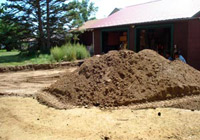
A large pile of dirt sits in front of a building with an open garage, surrounded by trees and grass on a sunny day.
1. Remove existing concrete, asphalt, etc.
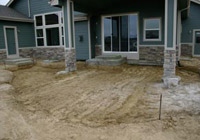
A house with unfinished landscaping; bare, leveled dirt covers the ground around the back patio and steps.
2. Excavate 5-12″ of soil depending on the project (walkway, patio, or driveway)
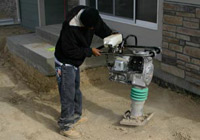
A person operates a soil compactor on a construction site near a building entrance.
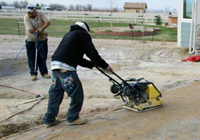
3. Compact subsoil
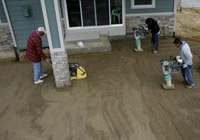
Three people use plate compactors to level and compress soil in front of a house under construction.
4. Install 4–8″ of roadbase, compact in 4″ lifts
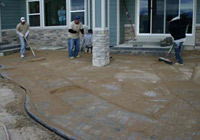
Three workers are leveling freshly poured concrete with a screed board on a driveway or sidewalk near a stone column.
5. Skreet roadbase to ensure correct depth of sand
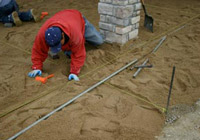
A person in a red jacket and blue hat kneels on sand near a brick post, working with metal rods and measuring tools.
6. Install 1–1.5″ of sand
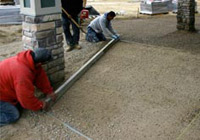
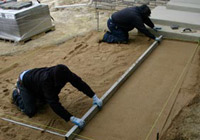
Two people kneel on sand while leveling the surface with a long straightedge tool, preparing the area for construction or paving.
7. Skreet sand for final grade
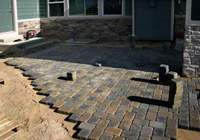
Partially completed stone patio with rectangular pavers in front of a house; some stones and unfinished ground are visible.
8. Install stone pavers
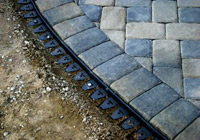
Close-up of interlocking concrete pavers bordered by a plastic edge restraint, with exposed soil and small rocks visible outside the border.
9. Cut in border stones and install edge restraint
10. Sweep in sand to fill joints
11. Vibrate in sand to ensure compaction and Power wash
12. The completed project
Offer ends May 31, 2025
10% off
Paver Driveways!